Patient Hub

Your One-Stop-Shop for Patient Information

Welcome to MCJR’s Patient Information Hub. We are “taking the pain out of joint replacement” in more ways than one. We want your journey to recovery to be as painless as possible. This hub houses everything you need to know in your patient journey at MCJR, as you prepare for surgery, work toward recovery, and need any questions answered along the way.

Preparing for Surgery

Midwest Medical Services, led by Dr. Dan DeSalle, works directly with MCJR to deliver personalized preoperative care for each joint replacement candidate. After you’ve scheduled surgery, you will then have an appointment in one of our offices with Dr. Dan DeSalle for any preoperative and medical fitness testing before surgery. His team coordinates care with your MCJR surgeon to ensure you are healthy
enough for surgery.

This includes:

Daniel DeSalle, DO

Daniel J. DeSalle, DO

Board Certified Internal Medicine Physician
Placeholder for "Pre-Operative Exercises" video from MCJR

We recommend you follow these therapy exercises before you have surgery. Learning these beforehand will help your recovery go more smoothly. Therapy exercises before surgery will give your body strength and range-of-motion in the areas that need it the most, and you will feel more prepared going into surgery.

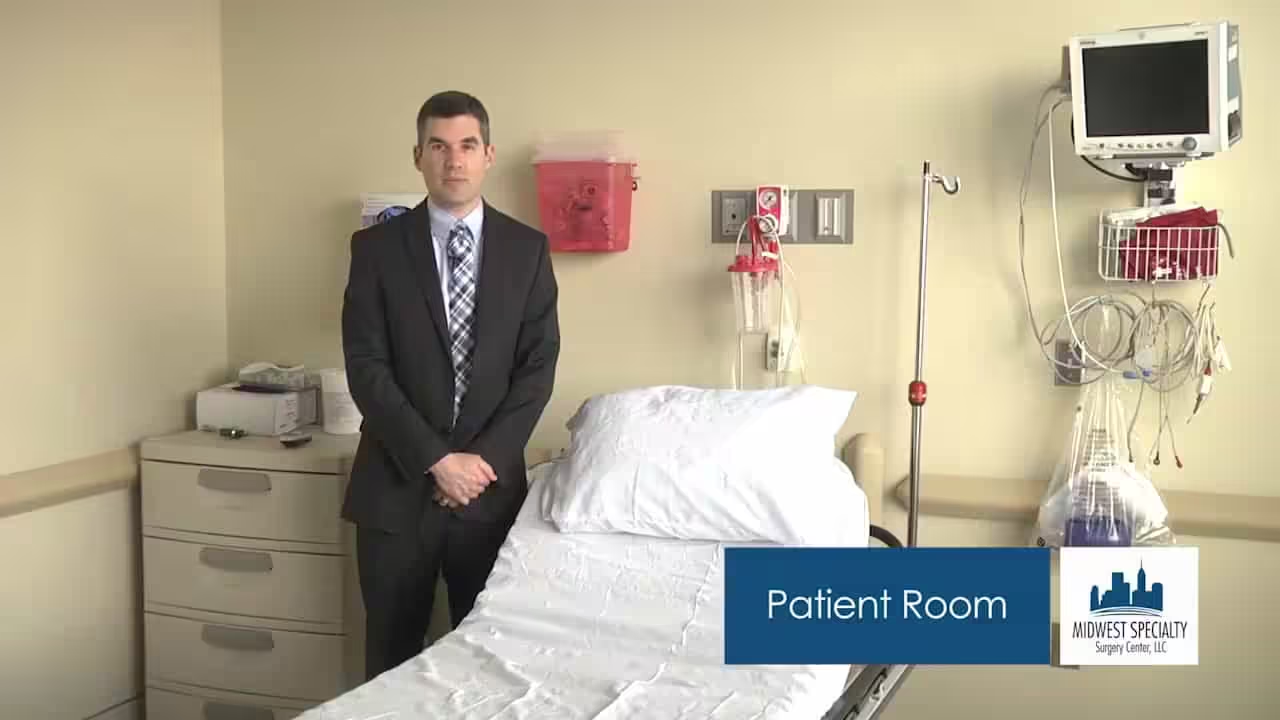
Placeholder for "Outpatient Surgery Process" video from MCJR
We work hard to make your day of surgery as smooth and as comfortable as possible. We will walk with you through every step of the process. For outpatient surgery, you and your loved ones can expect to spend between 6-8 hours at the facility. For inpatient surgery, a typical stay will last up to 48 hours. After surgery, our physical therapists will teach you some of the basic exercises to begin recovery.

Faster Recovery

Recovery begins immediately after surgery, with 90% of patients taking their first steps the day of surgery and discharging home the same day. Early mobility is key: it helps reduce stiffness, improve circulation, and begin the process of restoring strength. Expect some pain and swelling the first few weeks, improving after postoperative days 3-4. These symptoms gradually improve with a combination of medication, icing, and guided movement.

Mobility

Doing one activity every hour for the first few weeks is a good guiding principle. Most patients utilize a walker or cane for a few weeks after surgery. Stairs are doable within a few days of surgery.

Rehabilitation exercises play a central role in successful recovery, and consistency improves long-term outcomes. Knee replacement patients focus on regaining range of motion early—particularly full extension. Hip replacement patients focus on developing safe movement patterns and gradually increasing walking distance.

Resuming Activities

Most patients utilize a walker or cane for a few weeks after surgery. Stairs are doable within a few days of surgery. Driving for left leg surgeries can resume within a few weeks. Driving for right leg surgeries can take 3-4 weeks as strength and reaction time improve and pain pill usage decreases.

Most patients resume normal daily activities within 4–6 weeks, though full recovery can take several months. By three months, many people report significant pain relief and improved function compared to their pre-surgery baseline. Most people are back to work within 4-12 weeks.

Long-term results are excellent, with modern implants designed to last 25 years or more. With proper rehabilitation and follow-up care, hip and knee replacements can offer lasting improvements in mobility, independence, and quality of life.

Recovery from shoulder replacement focuses on restoring comfort and mobility. For the first 2 weeks, the arm is supported in a sling to protect the joint and allow early healing. Expect some soreness and swelling, which steadily improve with rest, ice, and medication.

Physical Therapy

Physical therapy is vital to recovery and progresses in phases. Gentle hand, wrist, and elbow motion begins right away, while shoulder activity is limited early on to protect tissue repair. Anatomic shoulder replacement patients focus on protecting the repaired rotator cuff, then gradually increase in mobility and strengthening as healing progresses. Reverse shoulder replacement patients can do active motions earlier on because there is more deltoid use than rotator cuff use. Throughout recovery, exercises focus on safe motion patterns, improving flexibility, strength, and control of the new joint.

Resuming Activities

Most patients regain comfortable daily function between 8–12 weeks, with strength and range of motion continuing to improve over several months. By three to six months, many report significant reductions in pain and great improvements in activities like reaching, lifting light objects, grooming, and household tasks. With proper rehabilitation and follow-up care, both reverse and anatomic total shoulder arthroplasty offer reliable pain relief, enhanced function, and getting patients back to the activities they love.

Recovery after rotator cuff repair is a carefully structured process designed to protect the tendon as it heals while gradually restoring strength and mobility. In the first 6 weeks, patients wear a sling to limit shoulder movement and reduce stress on the repaired tissue. Some soreness, swelling, and sleep discomfort are common during the first few weeks, but these improve steadily with rest, ice, and medication. Hand, wrist, and elbow movement begin right away, while the shoulder itself is protected to allow the repair to heal securely.

Mobility

Physical therapy progresses slowly and intentionally, and consistency is key. Early rehabilitation focuses on gentle, passive motion. As healing improves, patients transition to active motion and then to strengthening exercises that restore stability, control, and shoulder power. Rotator cuff tendons require time to heal fully to the bone.

Resuming Activities

Most patients begin to regain comfortable daily function around 10–12 weeks, while strengthening continues for several months. Full recovery can take 6–9 months depending on the size of the tear, tissue quality, and individual progress. Over time, patients typically experience significant reductions in pain, better sleep, improved shoulder motion, and a return to the activities they enjoy. With proper protection, patience, and guided rehabilitation, rotator cuff repair can provide long-lasting improvements in shoulder comfort and function.

Physical therapy after a joint replacement will help strengthen your joints and make you more flexible, therefore speeding up the recovery process. A successful outcome after surgery is highly dependent upon your dedication to these exercises, so maintaining consistency is key to regaining proper joint movement and strength.

After Hip Replacement
Placeholder for "Post-Operative Exercises - Hip" video from MCJR
After Knee Replacement
Placeholder for "Post-Operative Exercises - Knee" video from MCJR

Patient Education

Frequently Asked Questions

MCJR’s Answers to Common Questions

Having a joint replacement may seem daunting. So we want to help you feel worry-free and fully prepared as you make the decision to have a joint replacement surgery. Watch these FAQ videos to hear from our surgeons firsthand.

Placeholder for "How long will my joint replacement last?" video from MCJR
How long will my joint replacement last?
Placeholder for "Am I too young for a joint replacement?" video from MCJR
Am I too young for a joint replacement?
Placeholder for "What are the advantages of a partial knee replacement?" video from MCJR
What are the advantages of a partial knee replacement?
Placeholder for "If I have a partial knee replacement, will I need a total someday?" video from MCJR
If I have a partial knee replacement, then will I need a total someday?
Placeholder for "Why have a partial knee replacement instead of a total?" video from MCJR
Why have a partial knee replacement instead of a total?
Placeholder for "What is an anterior hip replacement?" video from MCJR
What is an anterior hip replacement?
Placeholder for "What exactly do you do when you perform a hip replacement?" video from MCJR
What exactly do you do when you perform a hip replacement?
Placeholder for "What have you done to lower infection in joint replacement?" video from MCJR
What have you done to lower infection in joint replacement?
Placeholder for "What's the recovery time after a joint replacement?" video from MCJR
What's the recovery time after a joint replacement?
Placeholder for "How soon can I drive after a hip replacement?" video from MCJR
How soon can I drive after a hip replacement?
Placeholder for "What's the recovery time after a joint replacement?" video from MCJR
What restrictions will I have after a hip replacement?
Placeholder for "What are the normal milestones after a hip replacement?" video from MCJR
What are the normal milestones after a hip replacement?
Placeholder for "How long will it take for my knee to heal?" video from MCJR
How long will it take for my knee to heal?
Placeholder for "How long will I be in the hospital?" video from MCJR
How long will I be in the hospital?
Placeholder for "Will I have to go to a rehab center?" video from MCJR
Will I have to go to a rehab center?
Placeholder for "What is the infection risk after knee replacement surgery?" video from MCJR
What is the infection risk after knee replacement surgery?

Ready to take the next step?

We welcome the opportunity to explore a joint replacement with you. Call 317-455-1064 to book an appointment, or request an appointment online.

Stories of Healing

Five Convenient Locations Serving Indiana

Midwest Center for Joint Replacement delivers advanced outpatient hip, knee, and shoulder joint replacement with compassionate, patient-centered care at convenient locations in Indianapolis, Bloomington, Terre Haute, Zionsville, and Avon.

Search Midwest Center for Joint Replacement